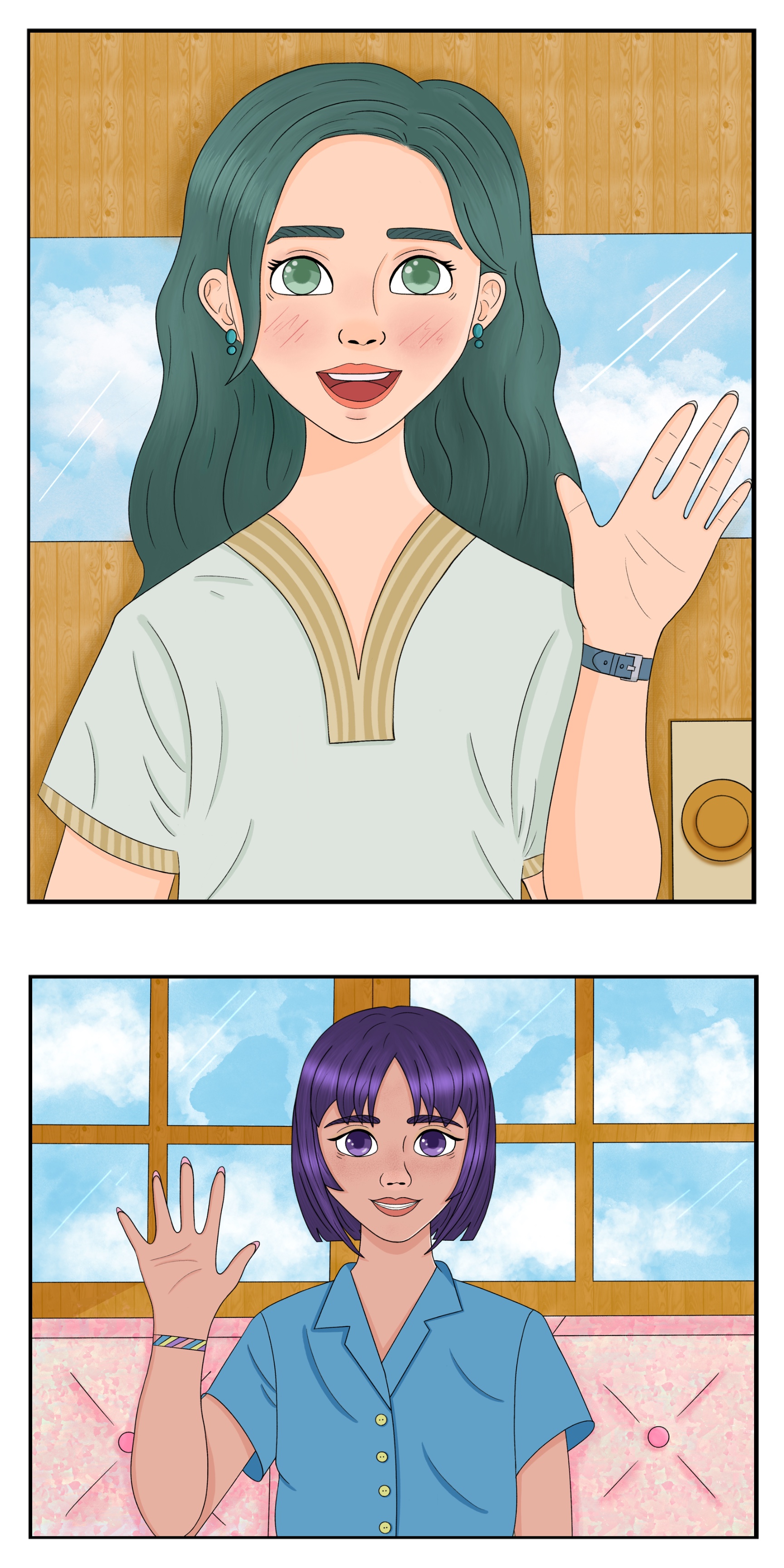
Artworks
Digital Literacy
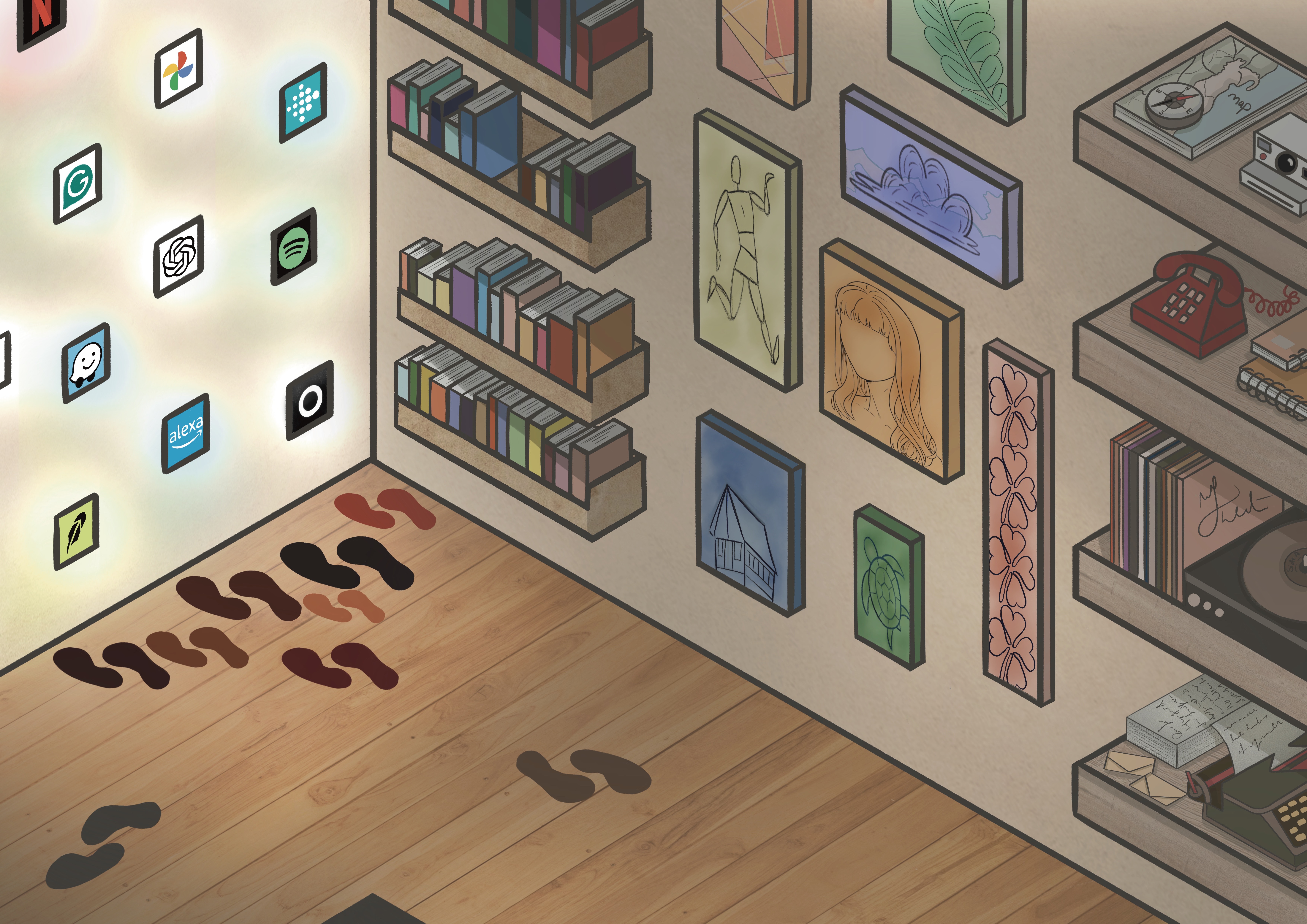
While AI might dominate our focus today, understanding its evolution requires a broader perspective that includes preceding mediums and future unknowns.

Accusations of using AI in creative work have gained momentum as work generated by AI has become more sophisticated. In some settings, to determine authenticity, AI detectors — tools susceptible to false positives — may be deployed. This invites us to reflect on how human-made art is being perceived differently in the shadow of AI-generated work.
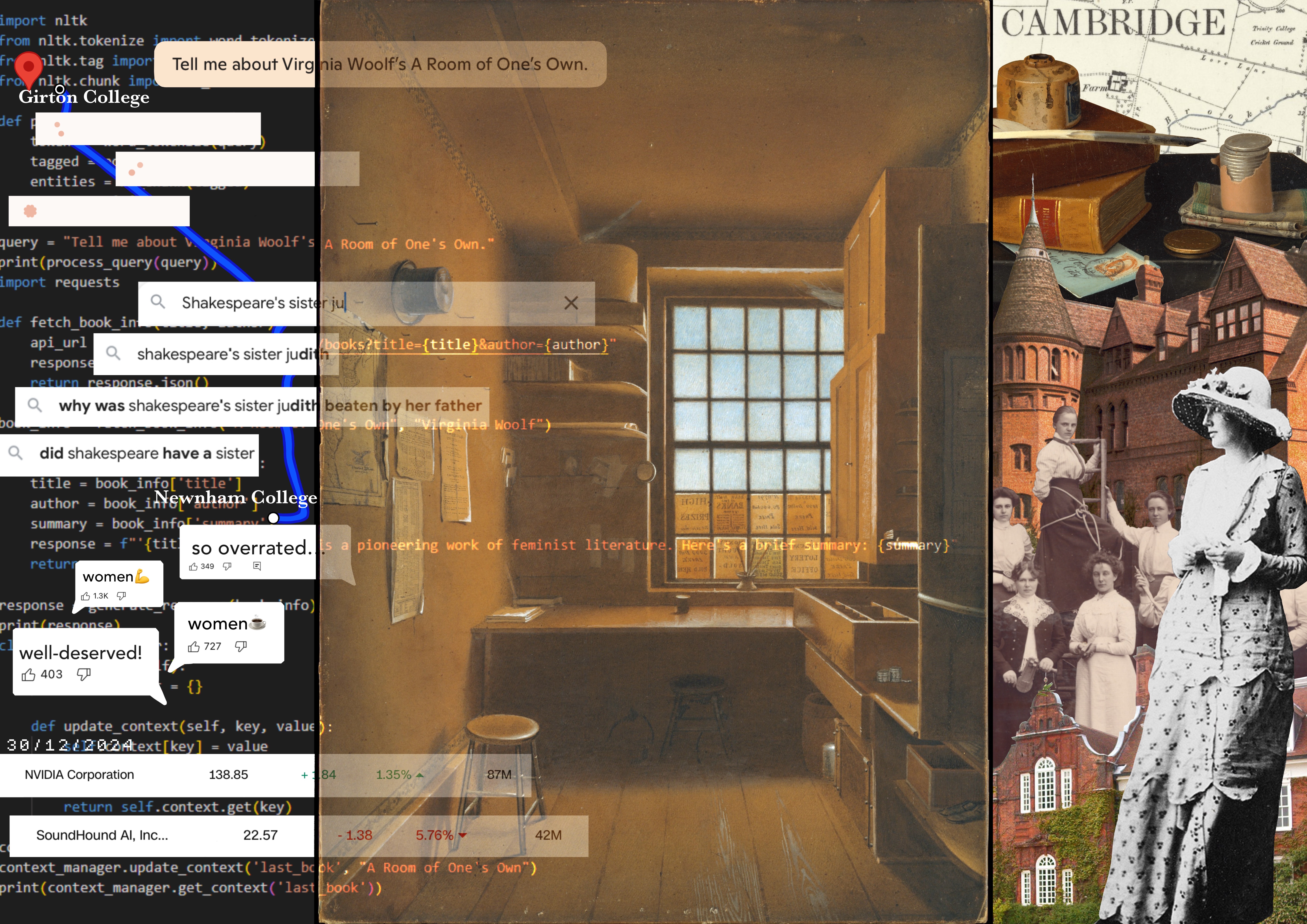
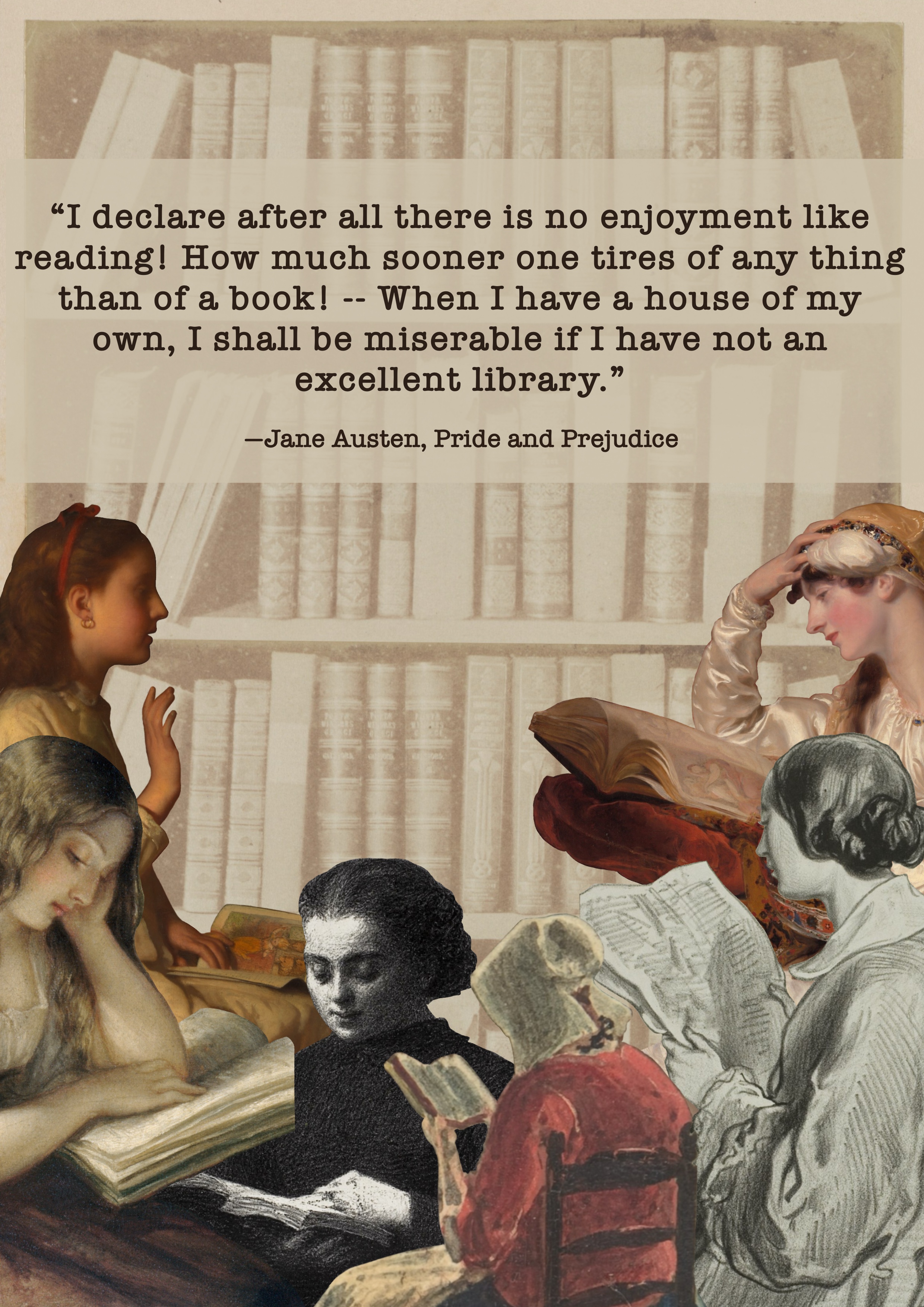
Drawing inspiration from Virginia Woolf's ideas in A Room of One's Own, allocating financial resources and providing safe spaces are necessary for women to have positive interactions with AI and to be well-represented in this field.
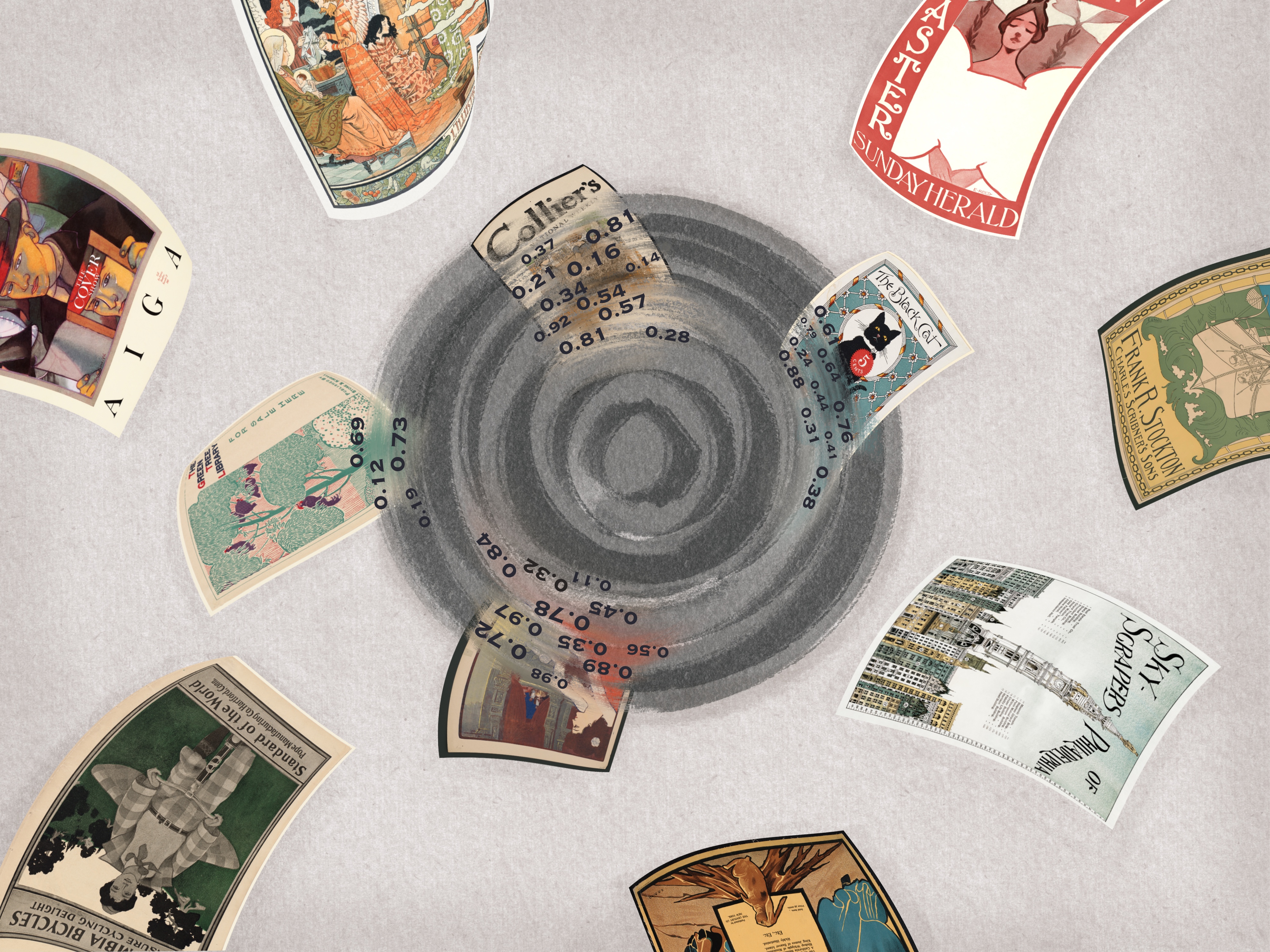
For artworks to become usable input for machine learning models, they must be converted into structured numerical data — a translation in which artistic value is lost in numbers. This image critiques the unconsented use of authors' works in AI training, depicting AI as a tornado pulling artworks into its centre to evoke lost agency and control.
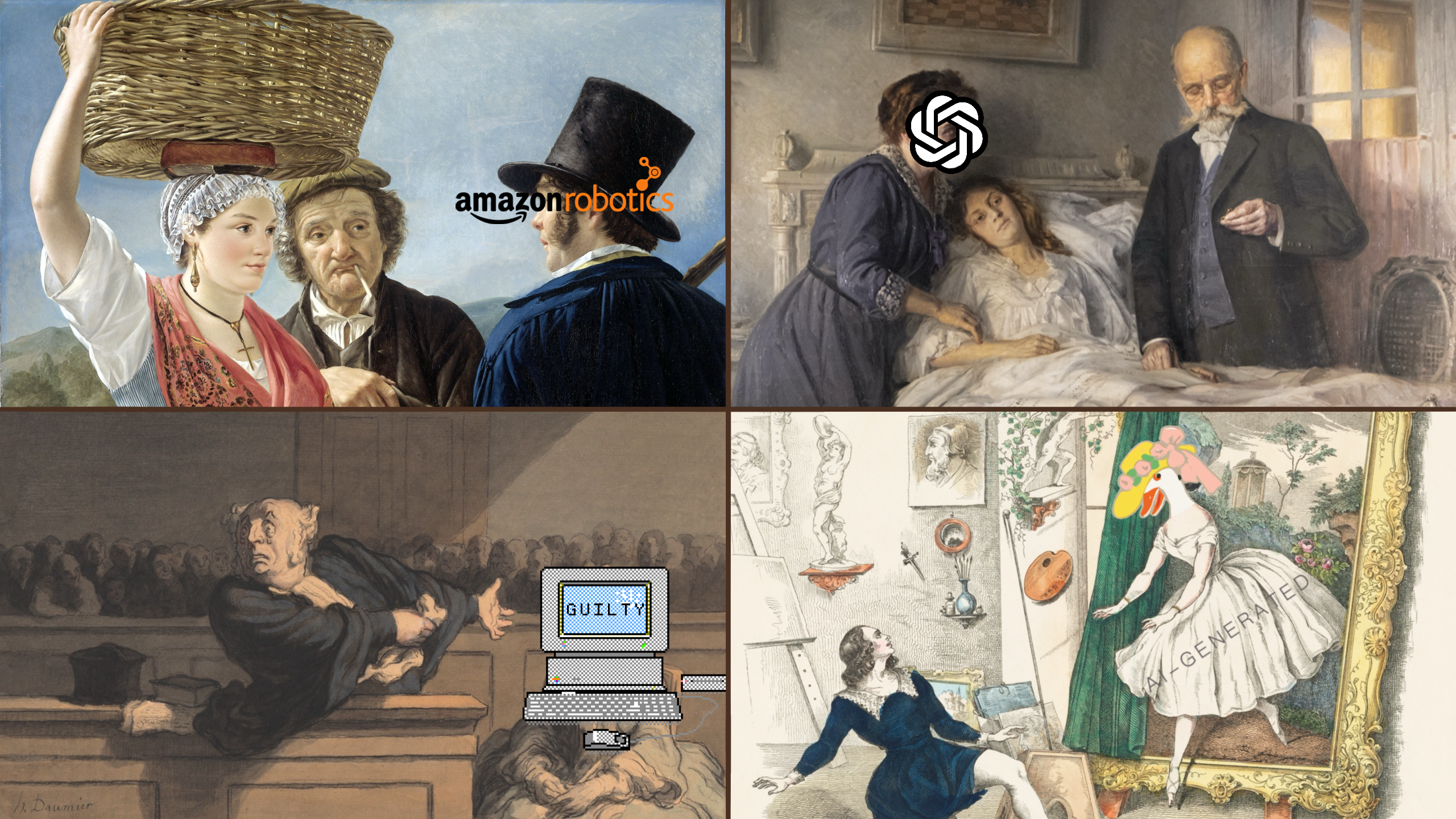
Technological adoption is taking many forms across professions. The use of robots for goods transportation, the use of AI in patient diagnosis and monitoring, the admission of computational evidence in court, and the incorporation of AI in creative work are among the instances displayed in the image.
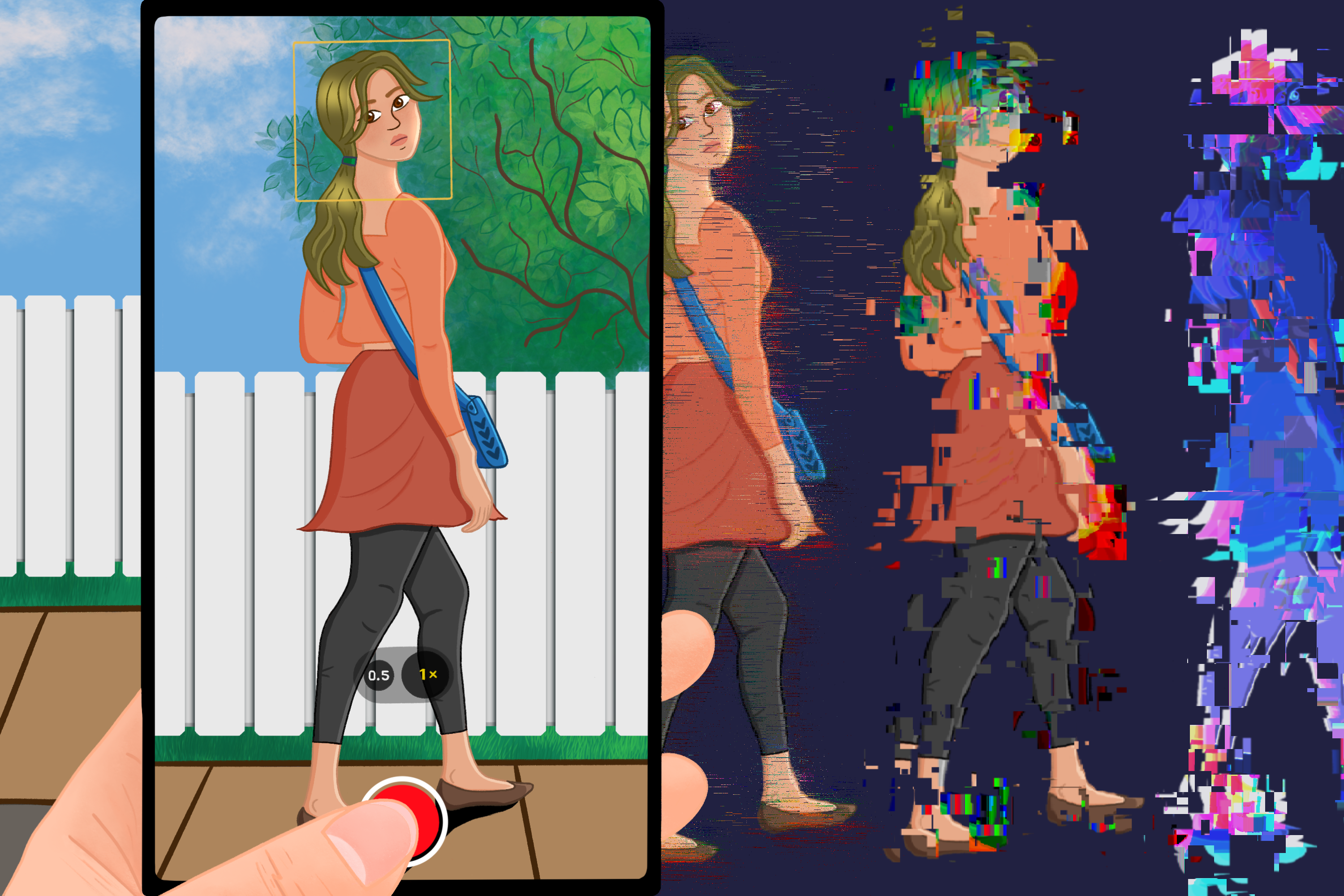
When videos of individuals, such as footage filmed and shared without explicit consent, enter the online world, they become vulnerable to further harms, including unauthorised use of personal data in AI training and the creation of deepfakes.
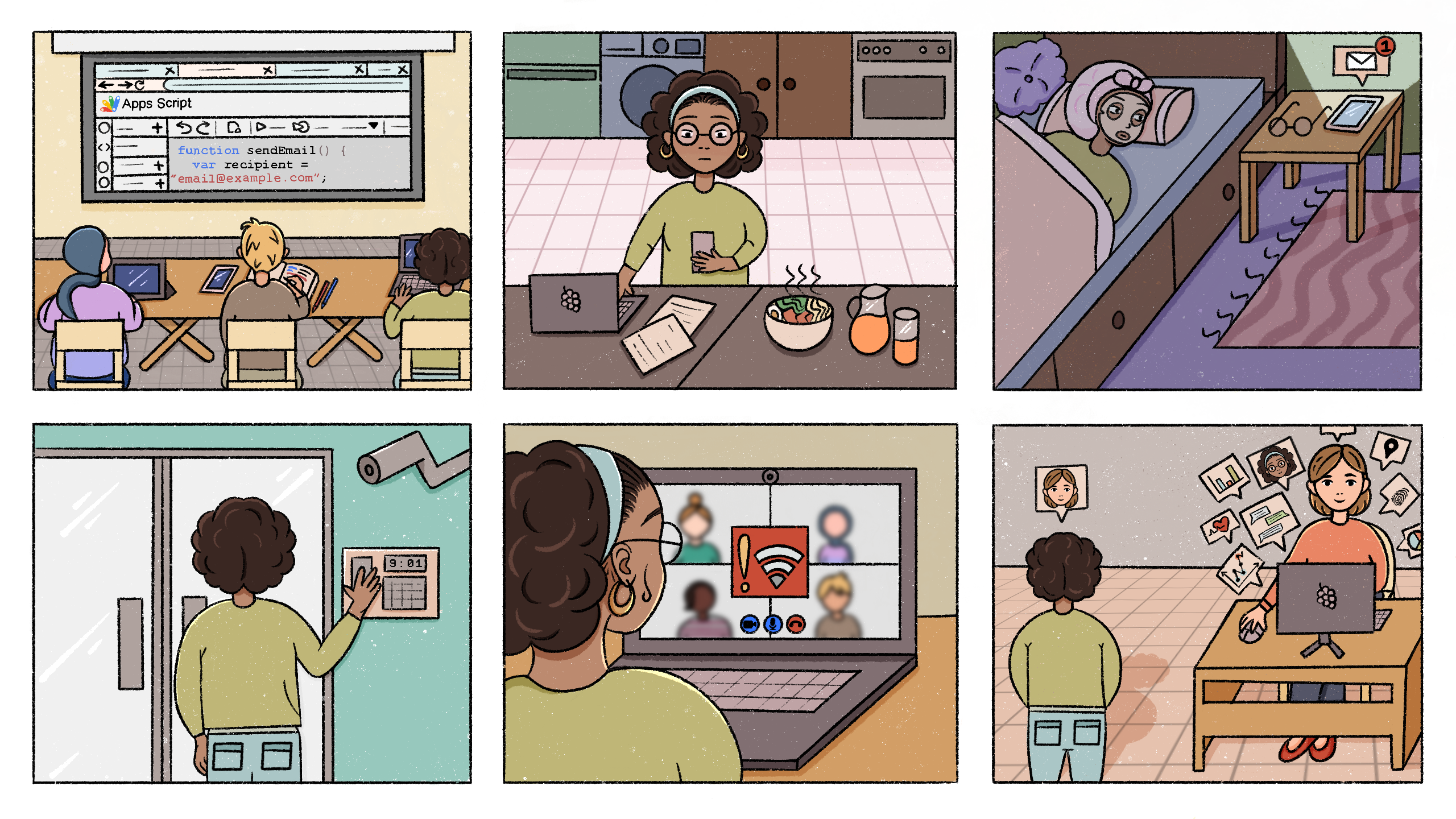
This comic-style storyboard displays some of the workplace transformations introduced by digitisation, namely: investment in digital skills training, the erosion of work-life boundaries, workplace surveillance, lack of access to reliable internet connection for remote work, and knowledge imbalance between employees and employers.